• Skip to primary navigation
  • Skip to main content
  • Skip to primary sidebar

The Institute of Australian Culture

Heritage, history, and heroes; literature, legends, and larrikins

  • Home
  • Articles
  • Biographies
  • Books
  • Ephemera
  • Poetry & songs
    • Recommended poetry
    • Poetry and songs, 1786-1900
    • Poetry and songs, 1901-1954
    • Rock music and pop music [videos]
    • Early music [videos]
  • Slang
  • Timeline
    • Timeline of Australian history and culture
    • Calendar of Australian history and culture
    • Significant events and commemorative dates
  • Topics

Philip Durham Lorimer

1 March 2013 · Leave a Comment

[Editor: This article provides biographical information on Philip Durham Lorimer; for various works by him click here.]
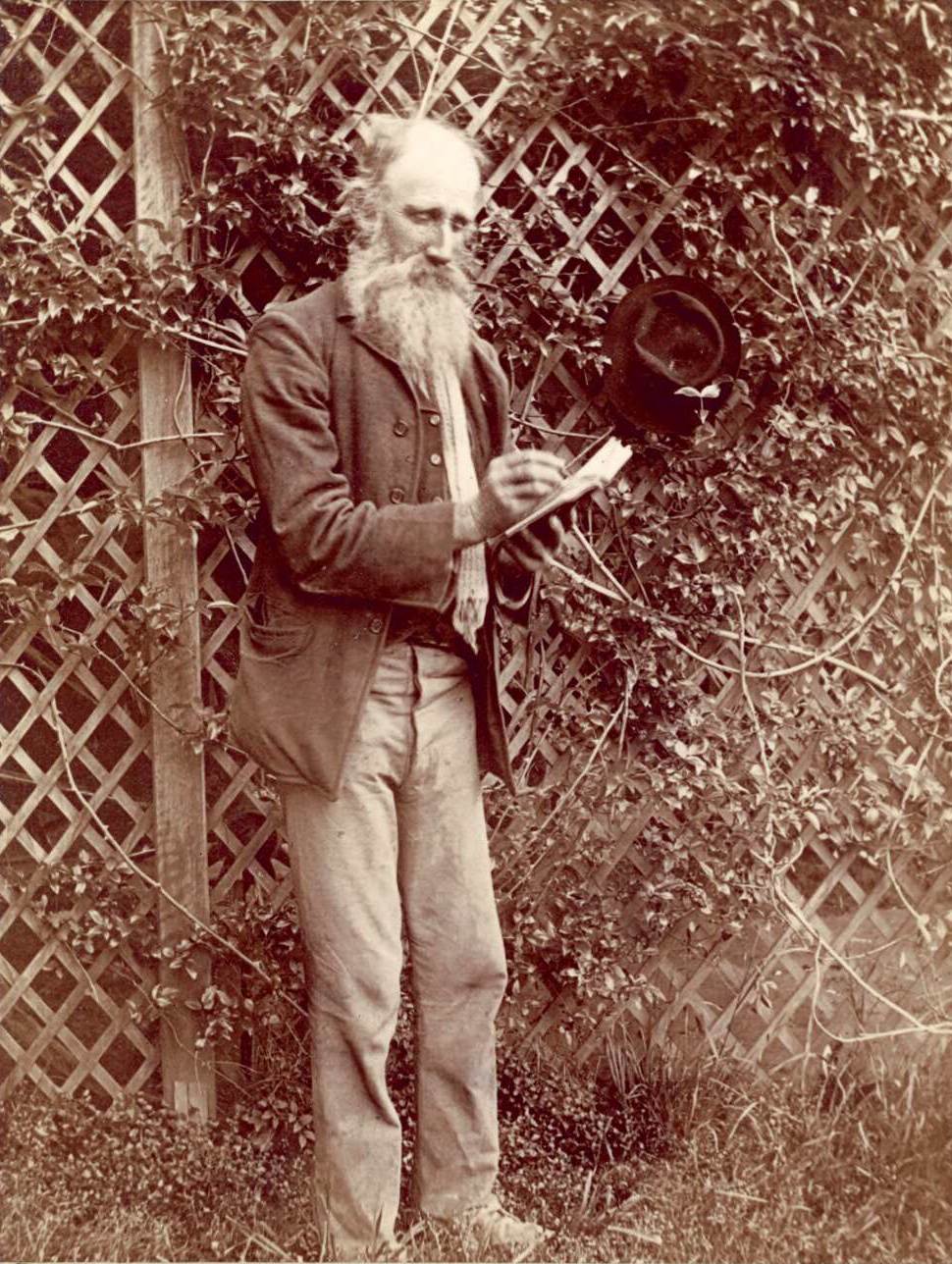
Philip Durham Lorimer
Philip Durham Lorimer was born in Madras, India, on 3 June 1843 to Scottish parents, Alexander Lorimer (a garrison assistant-surgeon) and Charlotte (Phillipa), née Henderson. Philip attended the Edinburgh Academy from 1854 to 1859, then migrated to Australia, arriving in Sydney in 1861.

Lorimer travelled throughout New South Wales and Queensland, working with overlanders to drive sheep and cattle. He also later travelled around Victoria.

He had several disappointments in life: Shortly after his arrival, he met and fell in love with a woman in Sydney, who died just a few years later (in 1868); he became very ill with “Gulf fever” for a while, from which he recovered; and he invested heavily in a business which subsequently failed.

Perhaps it was a combination of these disappointments that led him to take up the life of a wanderer, travelling from town to town, visiting bushmen’s huts, diggings, farming properties and stations, often paying his way by writing poetry for others. He was well-known to editors of various country newspapers, to whom he sold his poems and occasionally some prose. Lorimer became known as “the Australian bush poet”.

Philip Lorimer had adopted a very solitary lifestyle, not only “on the track”, but also later by establishing a “home” in a cave in the Blue Mountains, which he used as a resting place during his travels, sometimes living there for weeks on end. He refers to his cave home in his poem “Returning To My Cave”.

Lorimer died of paraplegia in Rookwood Asylum (Lidcombe, Sydney) on 5 November 1897.

Articles about Philip Durham Lorimer:
“[The poor poet has been in the wars]” [28 July 1888]
A legal charge is brought against Philip Lorimer.
“Death of a bush poet” [17 November 1897]
Obituary for Philip Lorimer.

A biography of Philip Durham Lorimer, written by Edward Augustus Petherick, was included in Songs and Verses by Philip Durham Lorimer: An Australian Bush Poet [1901]
Following are the several parts of the biography of Philip Durham Lorimer:
Biographical Sketch
I. The wilderness
II. Vanity Fair
III. The Pilgrimage
IV. The Delectable Mountains
V. Beulah

References and further information:
Cecil Hadgraft. “Lorimer, Philip Durham (1843–1897)”, Australian Dictionary of Biography, National Centre of Biography, Australian National University (accessed 19 March 2013)
“Philip Durham Lorimer” [entry from the Oxford Companion to Australian Literature], Answers.com (accessed 19 March 2013)

Filed Under: IAC biographies Tagged With: IAC biographies, Philip Durham Lorimer (1843- 1897) (subject)

Reader Interactions

Leave a Reply Cancel reply

Your email address will not be published. Required fields are marked *

Primary Sidebar

The Institute of Australian Culture
Heritage, history, and heroes. Writers, workers, and wages. Literature, legends, and larrikins. Stories, songs, and sages.

Search this site

Featured books

The Man from Snowy River and Other Verses, by Banjo Paterson A Book for Kids, by C. J. Dennis  The Bulletin Reciter: A Collection of Verses for Recitation from The Bulletin The Songs of a Sentimental Bloke, by C. J. Dennis The Complete Inner History of the Kelly Gang and Their Pursuers, by J. J. Kenneally The Foundations of Culture in Australia, by P. R. Stephensen The Australian Crisis, by C. H. Kirmess Such Is Life, by Joseph Furphy
More books (full text)

Featured lists

Timeline of Australian history and culture
Significant events and commemorative dates
A list of significant Australiana
Australian slang
Books (full text)
Australian explorers
Australian literature
Recommended poetry
Poetry and songs, 1786-1900
Poetry and songs, 1901-1954
Rock music and pop music (videos)
Folk music and bush music (videos)
Early music (videos)
Topics
Links

Featured posts

Advance Australia Fair: How the song became the Australian national anthem
Brian Cadd [music videos and biography]
Ned Kelly: Australian bushranger
Under the Southern Cross I Stand [the Australian cricket team’s victory song]

Some Australian authors

Barcroft Boake
E. J. Brady
John Le Gay Brereton
C. J. Dennis
Mary Hannay Foott
Joseph Furphy
Mary Gilmore
Charles Harpur
Grant Hervey
Lucy Everett Homfray
Rex Ingamells
Henry Kendall
“Kookaburra”
Henry Lawson
Jack Moses
“Dryblower” Murphy
John Shaw Neilson
John O’Brien (Patrick Joseph Hartigan)
“Banjo” Paterson
Marie E. J. Pitt
A. G. Stephens
P. R. Stephensen
Agnes L. Storrie (Agnes L. Kettlewell)

Recent Posts

  • Danger in the Bush [poem re drop bears, 17 September 1891]
  • Armistice [by G. J. Hill, 1 December 1930]
  • Gold in possession: Beaufort man involved: City court convicts: Notice of appeal [20 April 1916]
  • Died on Active Service / Heroes of the Empire [Australian military personnel (WW1, WW2), 24 April 1943]
  • Flooded house on Villiers Street, Grafton (NSW) [postcard, circa 1950]

Top Posts & Pages

  • Australian slang, words, and phrases
  • The Man from Snowy River [poem by Banjo Paterson]
  • The Man from Ironbark [poem by Banjo Paterson]
  • Rommel’s comments on Australian soldiers [1941-1942]
  • The Bard and the Lizard [poem by John Shaw Neilson]

Archives

Categories

Posts of note

The Bastard from the Bush [poem, circa 1900]
A Book for Kids [by C. J. Dennis, 1921]
Click Go the Shears [traditional Australian song, 1890s]
Core of My Heart [“My Country”, poem by Dorothea Mackellar, 24 October 1908]
Freedom on the Wallaby [poem by Henry Lawson, 16 May 1891]
The Man from Ironbark [poem by Banjo Paterson]
Nationality [poem by Mary Gilmore, 12 May 1942]
The Newcastle song [music video, sung by Bob Hudson]
No Foe Shall Gather Our Harvest [poem by Mary Gilmore, 29 June 1940]
Our pipes [short story by Henry Lawson]
Rommel’s comments on Australian soldiers [1941-1942]
Shooting the moon [short story by Henry Lawson]

Recent Comments

  • Nick on The Sliprails and the Spur [poem by Henry Lawson]
  • Hayden Giles on Drop Bears
  • chris levett on [A Very Charming Gentleman] [poem by C. J. Dennis]
  • WARREN DAVID SHARDLOW on Flash Jack from Gundagai [song, 1905]
  • Brendan Kelly on Unfurl the Flag [song, 16 December 1882]

For Australia

Copyright © 2026 · Log in