• Skip to primary navigation
  • Skip to main content
  • Skip to primary sidebar

The Institute of Australian Culture

Heritage, history, and heroes; literature, legends, and larrikins

  • Home
  • Articles
  • Biographies
  • Books
  • Ephemera
  • Poetry & songs
    • Recommended poetry
    • Poetry and songs, 1786-1900
    • Poetry and songs, 1901-1954
    • Rock music and pop music [videos]
    • Early music [videos]
  • Slang
  • Timeline
    • Timeline of Australian history and culture
    • Calendar of Australian history and culture
    • Significant events and commemorative dates
  • Topics

Charles Harpur

2 June 2012 · Leave a Comment

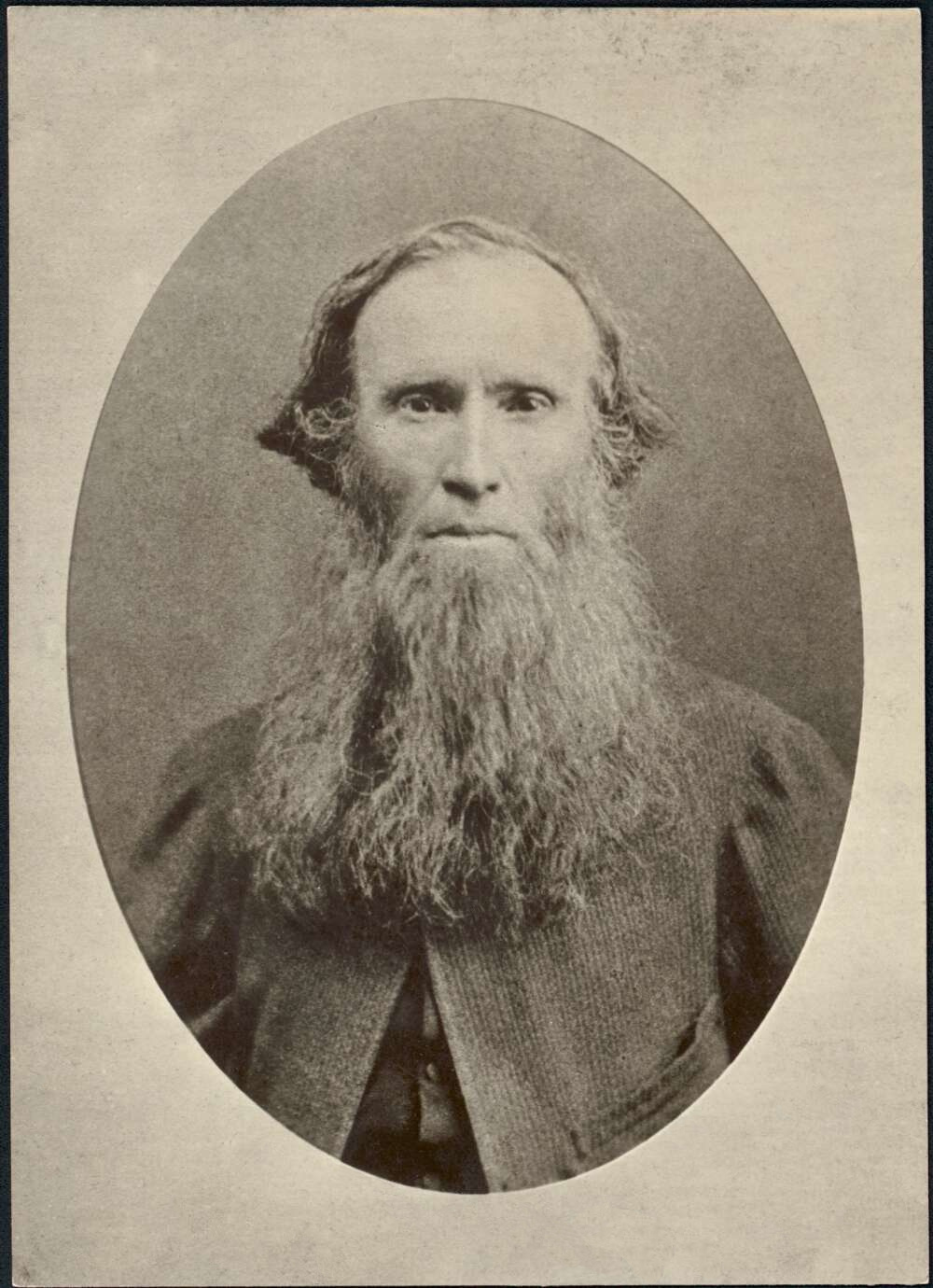
Charles Harpur
Charles Harpur
[Editor: This article provides biographical information on Charles Harpur; for various works by him, click here.]

Charles Harpur was Australia’s first significant native-born poet and has been described as “The father of Australian poetry”.[1] He has often been credited as the first native-born poet to have had his works published in Australia, although that distinction actually belongs to Charles Tompson; however, Harpur was Australia’s first poet of consequence, and is still highly-regarded in modern times.

Harpur was born in Windsor, New South Wales, on 23 January 1813. His father was from County Cork, Ireland, and his mother from Somerset, England, both of whom had been sent out to Australia as convicts.

In a time without the modern benefits of free public education and free public libraries, Charles was lucky that his father was close friends with John Macarthur, Governor Lachlan Macquarie, and the Reverend Samuel Marsden, as he was able to visit their private libraries, which, along with the support of his father, enabled him to gain an education that someone in his position would not normally acquire.

His biographer, James Normington-Rawling (author of Charles Harpur, an Australian), wrote that Harpur had early on decided that his mission in life was that of a poet and he therefore ignored the pursuit of money, thus enabling him to concentrate on his writing. He took on various mundane jobs to sustain himself, but became a teacher after he was married in 1850 to Mary Doyle. He lasted a year in his teaching position, but left that to do sheep farming; this move may have been made to enable him to concentrate on his writing again, and was possibly due to the influence of Daniel Deniehy and other writers whom he had met in Sydney. However, he later took on a job as an assistant gold commissioner, which lasted from 1859 to 1866.

His writings were widely published, with his poetry appearing in many newspapers, along with articles that expressed his support for the right to vote, colonial self-government, republicanism, and an end to the transportation of convicts. His works were well-regarded, and he was in contact with many others in the Australian literary scene, such as John Le Gay Brereton, Daniel Deniehy, Henry Kendall, James Norton, and Henry Parkes.

The Cambridge History of English and American Literature says that “Charles Harpur may be considered the first distinctively Australian poet. . . . He was the first Australian poet to give a worthy imaginative representation of Australian scenery and nature.”[2]

Harpur died of tuberculosis in Eurobodalla, New South Wales, on 10 June 1868. He was survived by his wife, two daughters, and two sons (a third son had died in March 1867 in an accident, a grievous blow which may have contributed to Harpur’s poor state of health).

His wife collected his poetry for publication and the volume Poems was published in 1883; however, many of the poems were so heavily edited by the book’s editor, H.M. Martin, that it is not regarded as the best representation of his work.[3] A massive collection of his poems (including manuscript poetry), The Poetical Works of Charles Harpur, was published in 1983.


References:
[1] “The Late Mr. Charles Harpur”, The Sydney Morning Herald (Sydney, NSW), 7 July 1868, page 5

[2] “XII. The Literature of Australia and New Zealand.§ 1. Charles Harpur” [The Cambridge History of English and American Literature in 18 Volumes (1907–21). Volume XIV. The Victorian Age, Part Two], Bartleby.com

[3] J. Normington-Rawling. “Harpur, Charles (1813–1868)”, Australian Dictionary of Biography, National Centre of Biography, Australian National University

Further information:
“Charles Harpur”, Wikipedia (accessed 15 October 2012)
“Harpur, Charles”, AustLit

The portrait photo of Charles Harpur included in this article has been digitally enhanced, so as to restore it to a state closer to its original condition. The unaltered image was sourced from Trove (National Library of Australia).
Graphic source:
“Portrait of Charles Harpur, poet [picture]”, Trove

Filed Under: IAC biographies Tagged With: 500x500, Charles Harpur (1813-1868) (subject), IAC biographies

Reader Interactions

Leave a Reply Cancel reply

Your email address will not be published. Required fields are marked *

Primary Sidebar

The Institute of Australian Culture
Heritage, history, and heroes. Writers, workers, and wages. Literature, legends, and larrikins. Stories, songs, and sages.

Search this site

Featured books

The Man from Snowy River and Other Verses, by Banjo Paterson A Book for Kids, by C. J. Dennis  The Bulletin Reciter: A Collection of Verses for Recitation from The Bulletin The Songs of a Sentimental Bloke, by C. J. Dennis The Complete Inner History of the Kelly Gang and Their Pursuers, by J. J. Kenneally The Foundations of Culture in Australia, by P. R. Stephensen The Australian Crisis, by C. H. Kirmess Such Is Life, by Joseph Furphy
More books (full text)

Featured lists

Timeline of Australian history and culture
Significant events and commemorative dates
A list of significant Australiana
Australian slang
Books (full text)
Australian explorers
Australian literature
Recommended poetry
Poetry and songs, 1786-1900
Poetry and songs, 1901-1954
Rock music and pop music (videos)
Folk music and bush music (videos)
Early music (videos)
Topics
Links

Featured posts

Advance Australia Fair: How the song became the Australian national anthem
Brian Cadd [music videos and biography]
Ned Kelly: Australian bushranger
Under the Southern Cross I Stand [the Australian cricket team’s victory song]

Some Australian authors

Barcroft Boake
E. J. Brady
John Le Gay Brereton
C. J. Dennis
Mary Hannay Foott
Joseph Furphy
Mary Gilmore
Charles Harpur
Grant Hervey
Lucy Everett Homfray
Rex Ingamells
Henry Kendall
“Kookaburra”
Henry Lawson
Jack Moses
“Dryblower” Murphy
John Shaw Neilson
John O’Brien (Patrick Joseph Hartigan)
“Banjo” Paterson
Marie E. J. Pitt
A. G. Stephens
P. R. Stephensen
Agnes L. Storrie (Agnes L. Kettlewell)

Recent Posts

  • Danger in the Bush [poem re drop bears, 17 September 1891]
  • Armistice [by G. J. Hill, 1 December 1930]
  • Gold in possession: Beaufort man involved: City court convicts: Notice of appeal [20 April 1916]
  • Died on Active Service / Heroes of the Empire [Australian military personnel (WW1, WW2), 24 April 1943]
  • Flooded house on Villiers Street, Grafton (NSW) [postcard, circa 1950]

Top Posts & Pages

  • Australian slang, words, and phrases
  • The Man from Ironbark [poem by Banjo Paterson]
  • The Man from Snowy River [poem by Banjo Paterson]
  • Drop Bears
  • The Bastard from the Bush [bawdy poem, circa 1900]

Archives

Categories

Posts of note

The Bastard from the Bush [poem, circa 1900]
A Book for Kids [by C. J. Dennis, 1921]
Click Go the Shears [traditional Australian song, 1890s]
Core of My Heart [“My Country”, poem by Dorothea Mackellar, 24 October 1908]
Freedom on the Wallaby [poem by Henry Lawson, 16 May 1891]
The Man from Ironbark [poem by Banjo Paterson]
Nationality [poem by Mary Gilmore, 12 May 1942]
The Newcastle song [music video, sung by Bob Hudson]
No Foe Shall Gather Our Harvest [poem by Mary Gilmore, 29 June 1940]
Our pipes [short story by Henry Lawson]
Rommel’s comments on Australian soldiers [1941-1942]
Shooting the moon [short story by Henry Lawson]

Recent Comments

  • DESMOND Fell on The tragic note in Australian literature [book review, 15 June 1946]
  • David Spackman on Chapter 1 [The Complete Inner History of the Kelly Gang and Their Pursuers, by J. J. Kenneally]
  • Greg Kilmartin on Aussie Verse and Verse-Writers: 1. Banjo Paterson [16 February 1918]
  • Nick on The Sliprails and the Spur [poem by Henry Lawson]
  • Hayden Giles on Drop Bears

For Australia

Copyright © 2026 · Log in